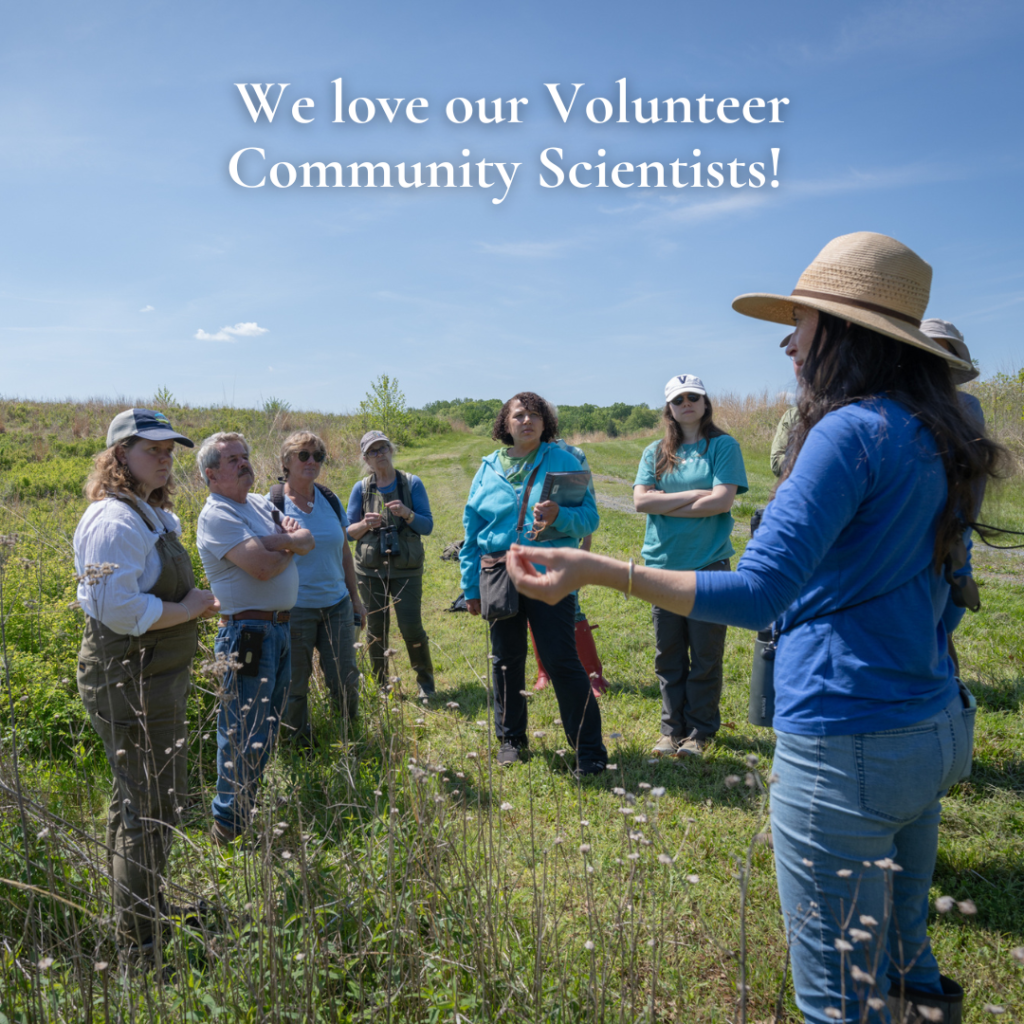
Virginia Working Landscapes is currently recruiting citizen scientists to assist with plant, bird and pollinator surveys across the Piedmont of northern Virginia, from Frederick to Albemarle County for spring and summer 2013. These surveys are part of a study of working grasslands that examines species diversity under various management regimes and at different stages of warm season grass establishment. Training and surveys are supported by the Smithsonian Conservation Biology Institute (SCBI) in Front Royal.
There is no need to be an expert naturalist to participate in the surveys (although both the plant and bird surveys demand a working knowledge of local flora and birds), all that is required is an interest in learning and sufficient time to dedicate to the project. Each survey will have a mandatory introductory meeting that will cover important information such as survey protocols, identification skills and site assignments. Please join us for one or more of the survey projects listed below:
Plant survey: Training will be held April 27th from 10:00 a.m. to 2:00 p.m. and will include protocols, identification skills, and specimen preparation. There is no need to be an expert in Virginia’s native flora, but we do ask that you have familiarity with Virginia flora, and the ability to key out unknown specimens with a dichotomous key and our reference collection. It is possible to pair with a more experienced person. Surveys will be performed in June and again from the last week of July through August. Each site will take approximately 6-8 hours to survey. You must be able to commit at least 5 days (an estimated 30-40 hrs plus travel), but the scheduling of the survey days is relatively flexible. Supplies and equipment provided.
Bird survey: Introductory training will be held on April 13th from 9:00 a.m. to 1:00 p.m. and will include a brief overview of project goals, survey protocols, data collection and site assignments. A practice survey session for new volunteers will be held May 12th from 8:00 a.m. to 10:00a.m and will focus on point count techniques. Knowledge of local bird species is essential. Survey season begins May 15th and runs until June 30th. Point counts are carried out within 4 hours of sunrise and take approximately 45-60 minutes per site (three 10-minute counts). Time commitment is a minimum of 6 survey sessions plus training (estimated 15 hrs not including travel). You will need personal binoculars and a field guide, all other survey supplies provided.
Pollinator survey: An introductory training session will be offered May 18th from 10 a.m. to 2:00 p.m. and will include training on pollinator life history, survey collection protocols in the field, identification of the most common bees and butterflies and specimen preparation for taxonomic identification. Surveys will be performed in late May-June and August. Each survey will each take 4 hours per site over two consecutive days (2 hrs each day) plus the additional time it takes to pin the bees. Citizen scientists are expected to process and store specimens properly, fill in survey sheets, pin specimens and deliver or coordinate delivery of samples to the pollinator survey coordinator. The final identification of specimens will be completed by para-taxonomists. Survey dates can be at the volunteers’ convenience within the specified sampling periods (Spring = June, Summer = August). You must be able to commit a minimum of 30 to 40 hrs (plus travel to our survey sites). Survey training, supplies and equipment provided.
What you will gain from volunteering your time:
1. An opportunity to apply your naturalist skills to ground breaking scientific research.
2. Training and knowledge of identification of key elements in Virginia grassland communities.
3. Training in survey and preparation protocols for specific guilds (birds, plants, pollinators).
4. Opportunities to network and communicate with others of similar interests.
5. Admission to 2013 VWL workshops.
What we will need from you:
1. A Volunteer Application form.
2. Your participation in introductory training sessions and sampling days.
3. Agreement to undergo fingerprinting and background check.
4. Completion of your field surveys within the allotted time period.
5. Prompt replies to emails concerning logistics and data management.
For more information, or to register for specific surveys contact: scbiecology@si.edu. Please provide your name, cell and/or home phone numbers, email, city of residence, survey you are interested in and a short description of your relevant skills. Please also indicate which counties you’d be willing to travel to for surveys (Frederick, Clarke, Loudoun, Rappahannock, Warren, Shenandoah, Page, Madison, Greene, Orange, Albemarle, Culpeper Fauquier, Prince William, Augusta).